

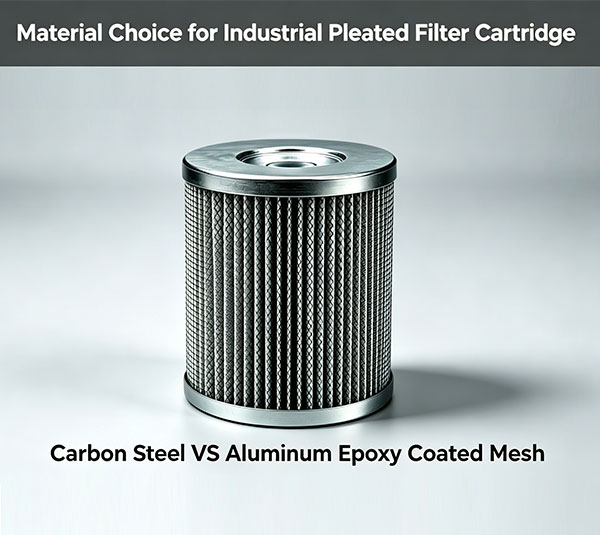
Both offer full resin coating and anti-corrosion properties, but differ greatly in cost, strength and environmental adaptability. As a professional filtration mesh supplier, HUZE breaks down their practical value to help you make cost-effective choices.
Carbon steel epoxy coated mesh stands out for its low initial cost. Affordable raw materials and mature processing cut bulk procurement costs significantly vs. aluminum. After strict electrostatic epoxy spraying and high-temperature curing, the dense coating blocks moisture, oil and weak corrosive media, preventing rust and burrs. With high rigidity and excellent pressure resistance, it maintains stable structural support under long-term fluid pressure and air impact. Ideal for indoor hydraulic filters, general industrial cartridges and conventional ventilation equipment, it’s the most economical choice for standard, mass-production filtration scenarios.
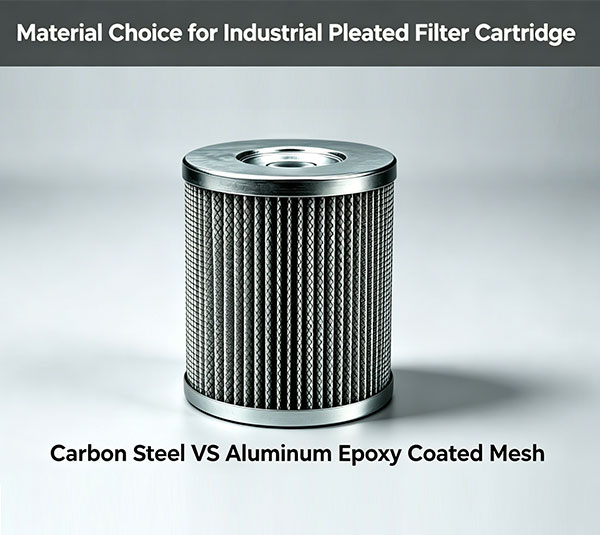
Aluminum epoxy coated mesh has higher upfront costs but delivers superior long-term benefits. Its natural oxidation resistance, enhanced by the epoxy coating, boosts moisture and corrosion protection. Lightweight and flexible, it bends and pleats easily with filter media without cracking, perfect for custom HVAC folded filters and outdoor systems. It excels in high-humidity, coastal and corrosive environments, with longer service life and zero maintenance. Though more expensive initially, it reduces replacement frequency and downtime, lowering life-cycle costs for harsh, continuous-operation scenarios.
For optimal cost-performance, choose carbon steel epoxy coated mesh for indoor, dry, high-pressure and cost-sensitive projects. Opt for aluminum epoxy coated mesh for humid, outdoor, coastal and high-cleanliness HVAC applications.
At HUZE, we optimize coating uniformity and structural stability for both materials. With precise production standards, we help you avoid material waste and performance mismatch, delivering reliable, cost-effective mesh support solutions for all filtration needs.