

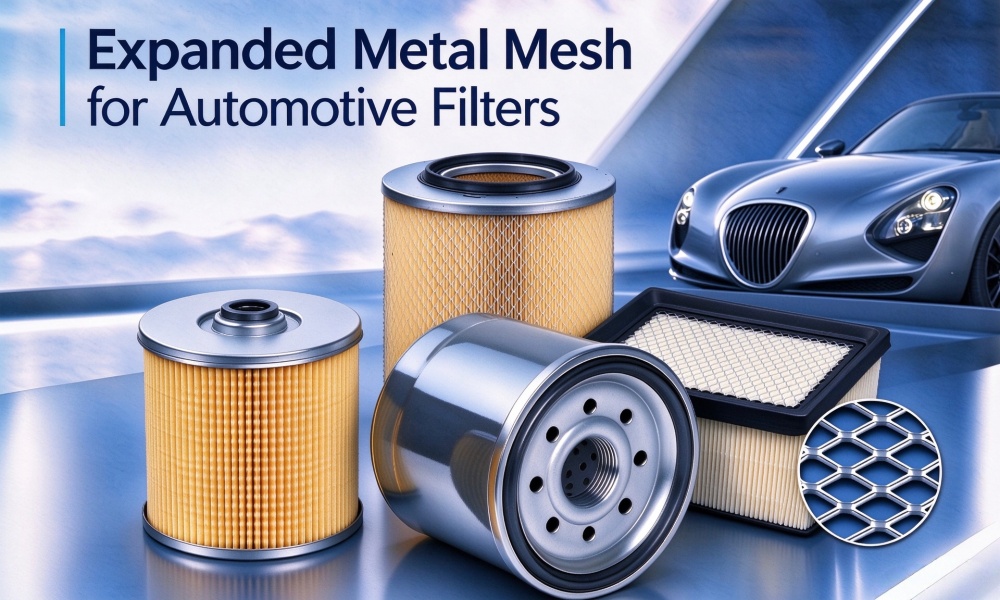
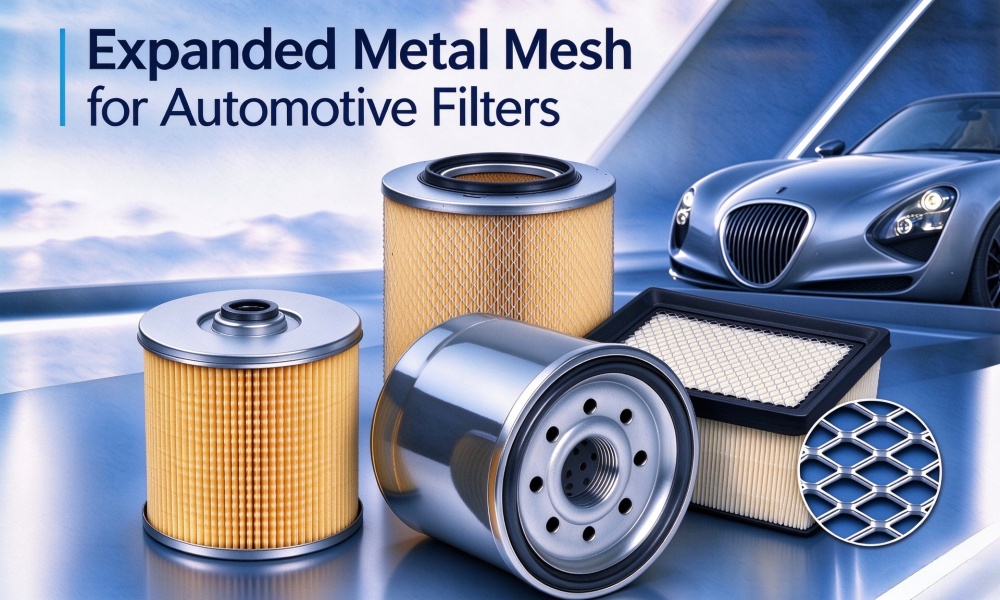
Expanded metal mesh is used in various filtration applications to provide structural support and protection for filter media. In automotive filters, the right mesh structure can help maintain filter element shape and meet the mechanical requirements of different filter designs.
Applications of Expanded Metal Mesh in Automotive Filters
Automotive filtration systems include engine air filters, oil filters, fuel filters and cabin air filters. Depending on the filter design, expanded metal mesh may serve as an inner support layer, an outer protective layer or a backing structure for filter media.
Engine Air Filters
In engine air filters, expanded metal mesh can support pleated filter media and help maintain its shape during operation. When used as an outer protective layer, it can also provide mechanical protection against deformation and handling damage.
Oil and Fuel Filters
In oil and fuel filtration systems, expanded metal mesh may be incorporated into the supporting structure of filter elements. Its opening size, strand width and material selection should be matched to the filter design and operating conditions.
Cabin Air Filters
For cabin air filtration, expanded metal mesh may be used in filter designs that require additional structural support or protection. Its suitability depends on the filter construction and the requirements of the manufacturer.
Key Specifications for Automotive Filter Mesh
Selecting expanded metal mesh for automotive filters requires more than choosing an opening size. Several factors should be considered:
· Opening size: The mesh opening should meet the structural requirements of the filter and be compatible with the filter media.
· Sheet thickness and strand width: These dimensions influence rigidity, weight and formability.
· Mesh type: Raised or flattened expanded metal may be selected according to the forming process and installation position.
· Material and surface treatment: Carbon steel, galvanized steel or other suitable materials may be considered depending on corrosion resistance and operating conditions.
· Width and roll length: These should match the customer's production equipment and processing requirements.
Typical Expanded Metal Mesh Specifications
Expanded metal mesh for automotive filter support applications is available in different opening sizes, thicknesses and strand widths to meet various structural and manufacturing requirements.
Reference specifications may include mesh openings of 3 × 4 mm, 3 × 6 mm, 4 × 6 mm, 4 × 8 mm, 5 × 10 mm and 10 × 20 mm, sheet thicknesses of 0.35–0.60 mm, and strand widths of 0.7–1.25 mm.
These dimensions are reference specifications rather than universal standards for automotive filters. The appropriate combination depends on the filter type, mesh position, filter media and production process. Customized specifications can be evaluated according to technical drawings, samples and specific application requirements.
Choosing the Right Expanded Metal Mesh Supplier
For automotive filter manufacturers, consistent mesh dimensions and stable material quality are important considerations. Variations in opening size, strand width or sheet thickness may affect forming, assembly and the final filter structure.
HUZE supplies expanded metal mesh for filter element support and protection applications. We work with customers to evaluate mesh specifications according to their drawings, samples and application requirements.
Whether you need expanded metal mesh for engine air filters or other automotive filtration applications, HUZE can help you explore suitable options based on your technical requirements.
Contact HUZE to discuss your expanded metal mesh specifications for automotive filters.
Email: sales@huzemesh.com
Tags:#ExpandedMetalMesh #AutomotiveFilters #AutomotiveAirFilters #FilterSupportMesh #FilterElementManufacturing