

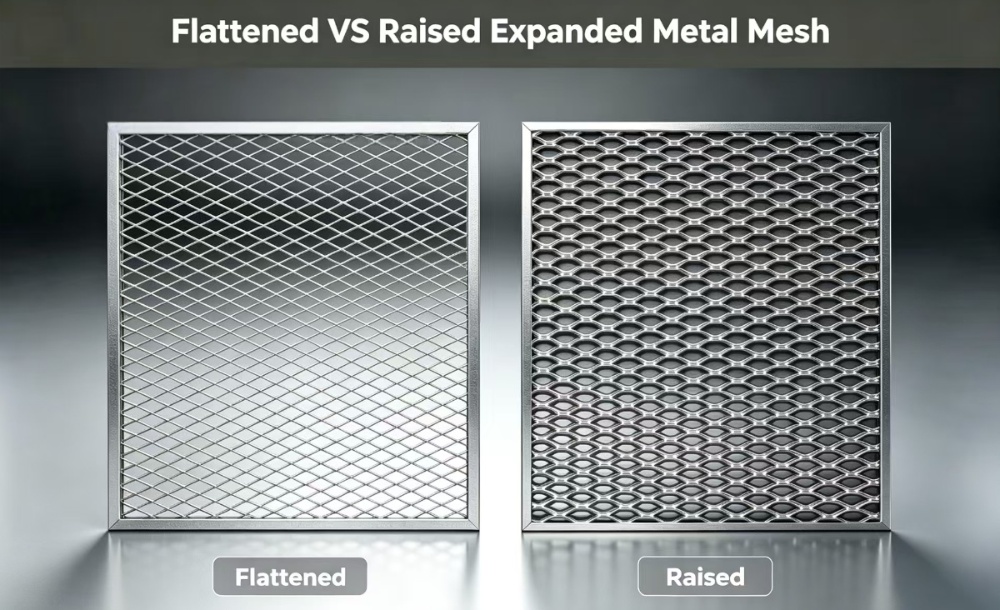
Filter manufacturers may follow simple selection guidance: pick flattened mesh where the material touches filter media or undergoes pleating; raised mesh is only for non-contact protective or spacer applications.
HUZE flattened expanded metal mesh (pleatable expanded metal) is roller-pressed to bring all strands and nodes onto one even plane. Its smooth, burr-controlled surface makes it the go-to option for high-volume automated filter manufacturing.
The flattened type is essential for pleated filter cartridges such as automotive oil, diesel, hydraulic and industrial liquid filters. The flat surface avoids piercing or scratching filter paper and non-woven media, delivers consistent pleat geometry and reduces rejects from jamming or skewed folds. It is also used for inner core tubes and sintered mesh backing layers. Thin-gauge 0.3-1.0 mm micro expanded metal for precision filters almost always uses the flattened grade to satisfy flatness tolerances for automated assembly.
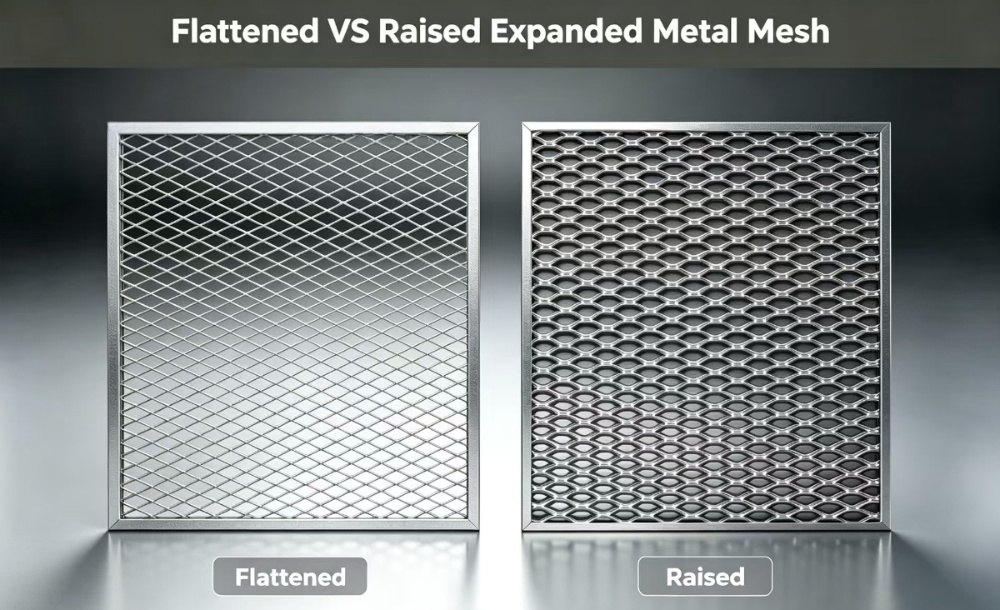
By comparison, raised expanded metal keeps its native 3D structure with protruding strands and sharp nodes. It offers higher rigidity and pressure resistance, yet cannot be used for pleating or direct contact with fine filter media.
Raised type can be used in typical filter-related application include spacer frames for coarse air filters, gap-reserved outer protective mesh for large-diameter cartridges, and heavy-duty skeletons for pulse backblow dust filters. When deployed, raised mesh must be separated from filter media by gaskets or liners to prevent friction-caused abrasion.
HUZE manufactures both flattened and raised expanded metal mesh for filter cartridge projects. Reach out to our team for material selection advice, custom specifications and technical support.
Tags: #ExpandedMetalMesh #FilterCartridgeProduction #FlattenedExpandedMetal #RaisedExpandedMetal #FilterSupportMesh