

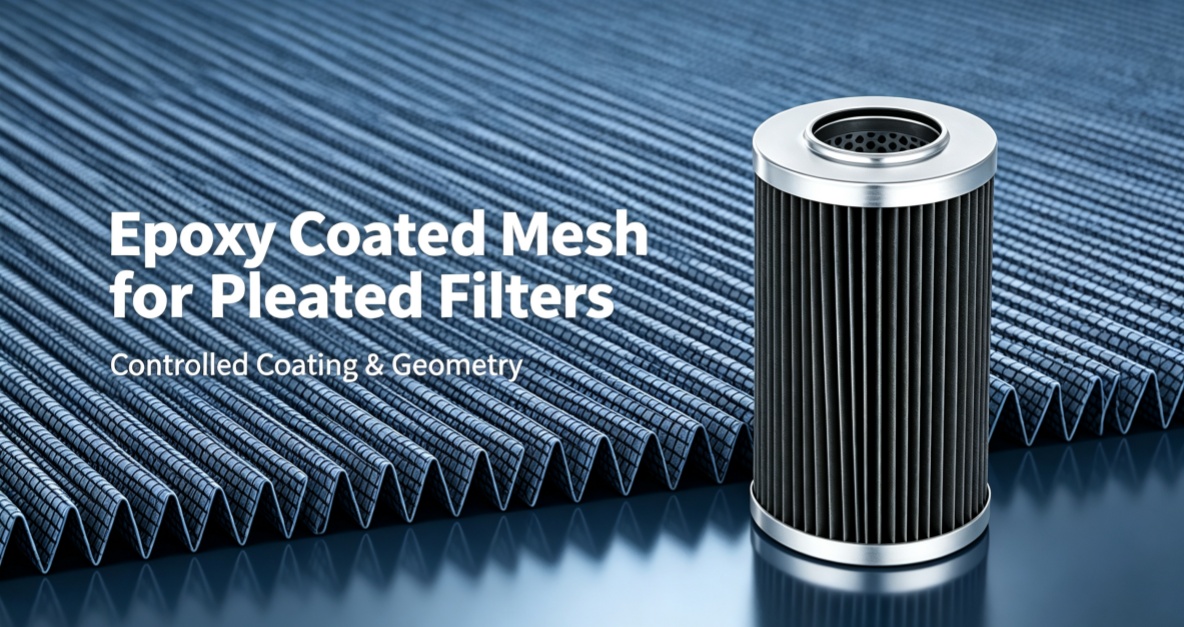
When epoxy coated wire mesh is used with filter media in pleated filter elements, its condition and consistency can affect how the two layers behave during feeding and forming. For filter manufacturers, attention to mesh quality goes beyond mechanical strength—it also includes geometry, coating consistency and roll condition.
1. Feeding and Layer Alignment
When filter media and support mesh are fed together, differences in stiffness, surface friction, width and roll winding condition may affect how consistently the two layers track through the process.
If the mesh gradually shifts sideways or does not feed evenly, it may become misaligned with the filter media. This can lead to uneven support across the pleated pack and affect the consistency of the finished element.
What to look for: stable roll winding, accurate width, good edge alignment and consistent mesh geometry.
2. Pleating and Forming Behavior
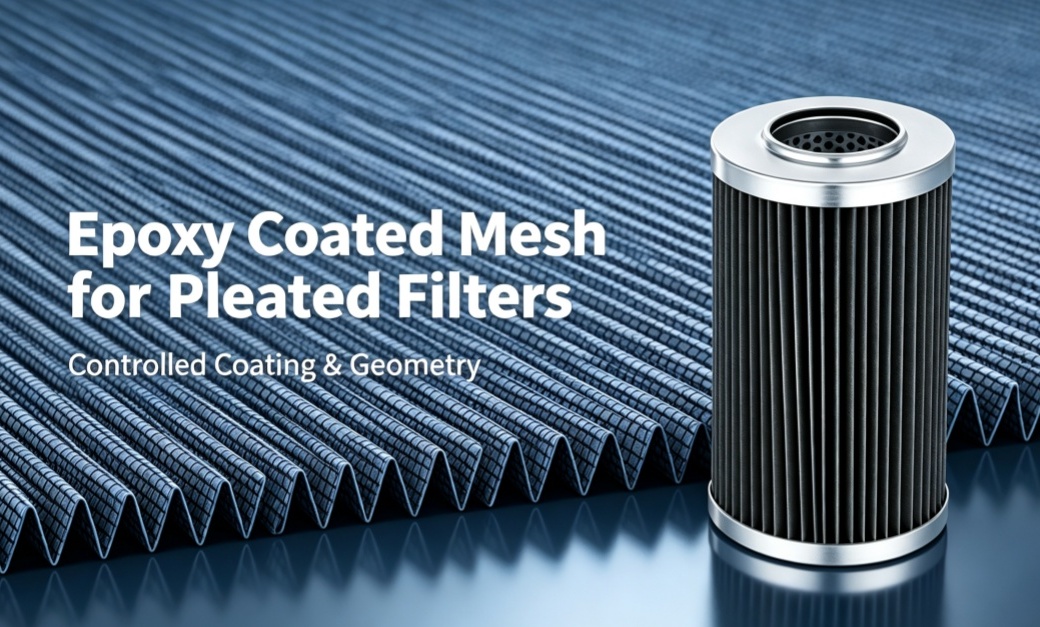
The support mesh needs sufficient strength while remaining suitable for the intended forming process. Excessive stiffness or inconsistent coating thickness may affect how the mesh follows the filter media during pleating, particularly in applications involving tighter or deeper pleats.
Coating thickness can also influence flexibility and open area. A controlled and uniform coating is therefore more important than simply maximizing coating thickness.
What to look for: a suitable balance of support strength, flexibility, coating coverage and open area.
3. Coating Adhesion During Forming
Slitting, bending and pleating can subject the coated mesh to repeated deformation. If coating adhesion is inadequate, cracking, peeling or exposed wire areas may occur during processing.
For mesh intended to be formed into pleated filter elements, coating integrity should therefore be considered alongside the basic corrosion-resistance requirements.
What to look for: uniform coating coverage, consistent surface condition and reliable adhesion suitable for subsequent forming.
Why Mesh Consistency Matters
These factors do not mean epoxy coated mesh is unsuitable for pleated filters. Rather, they highlight why consistent mesh quality matters when the support layer becomes part of a filter manufacturer's production process.
The key is selecting mesh with consistent geometry, coating and roll condition that matches the intended filter construction and application.
At HUZE, mesh opening, wire diameter, width, coating condition and roll winding can be controlled according to customer specifications.
For filter manufacturers, consistent epoxy coated woven wire mesh can help reduce unnecessary variables when the support mesh enters the pleating process.
Any inquiries or questions, contact us:sales@huzemesh.com
#EpoxyCoatedMesh #FilterSupportMesh #PleatedFilter #FilterElementSupport #IndustrialFiltration