

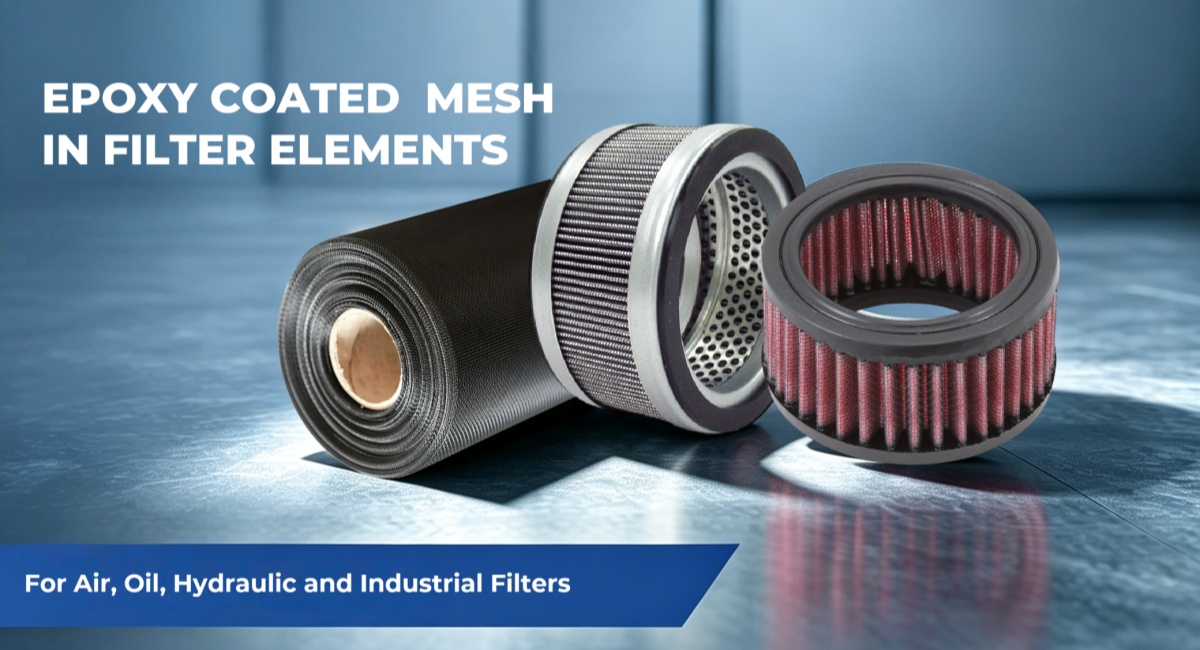
Epoxy coated mesh works together with the filter media and element structure, so its performance can vary significantly depending on the complete filter design.
One important factor is the relationship between mesh count, wire diameter and open area. A finer mesh provides more contact points for supporting the media, but a smaller opening area can increase resistance to airflow or fluid flow. A larger wire diameter can improve mechanical rigidity, while excessive thickness may make the mesh more difficult to pleat and form.
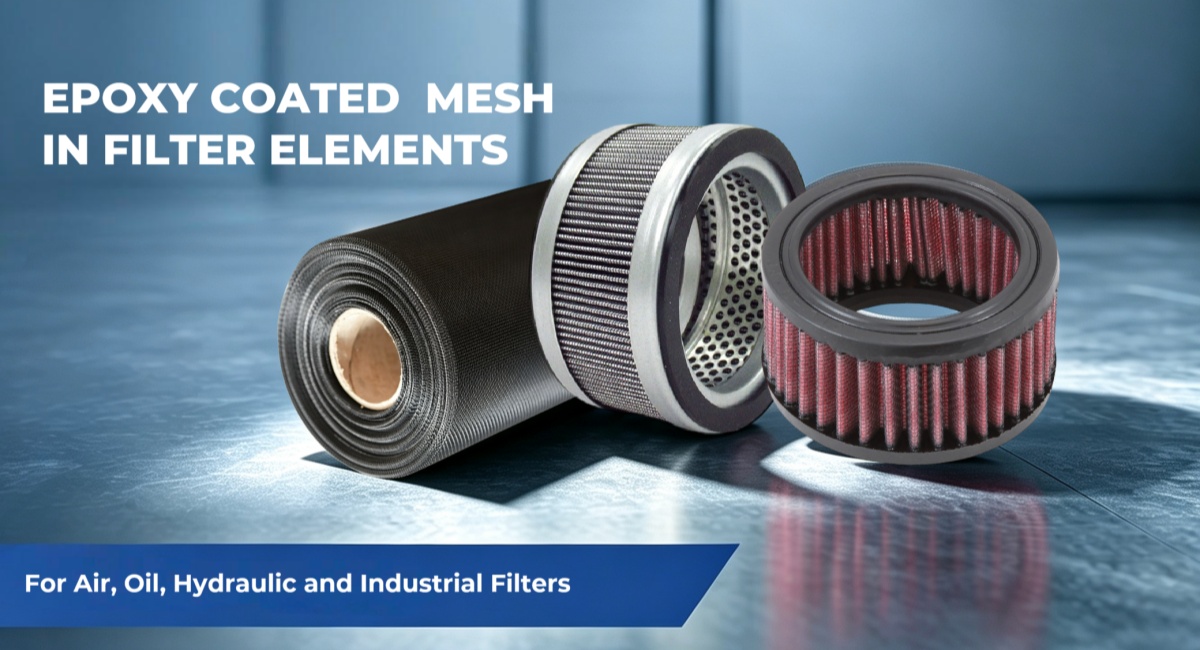
For HUZE mesh, support mesh selection should also consider the filter media, pleat depth, bending radius, differential pressure and the position of the support layer. During pleating, the mesh needs sufficient flexibility to follow the media geometry while maintaining stable contact with the filter media. Coating adhesion is also important because the mesh may undergo bending, cutting and forming during production.
In hydraulic and industrial filter elements, Epoxy coated mesh is commonly used as a support structure to help resist media deformation under differential pressure. However, the support mesh should not be selected independently from the filtration media. The objective is to achieve an appropriate balance between mechanical support, flow area and manufacturability.
At HUZE, we help filter manufacturers evaluate Epoxy coated mesh according to their actual element construction and production requirements. Need help selecting a suitable support mesh? Contact HUZE to discuss your application and arrange samples for testing.
#EpoxyCoatedMesh #FilterSupportMesh #FilterElementSupport #HydraulicFilter #IndustrialFiltration