

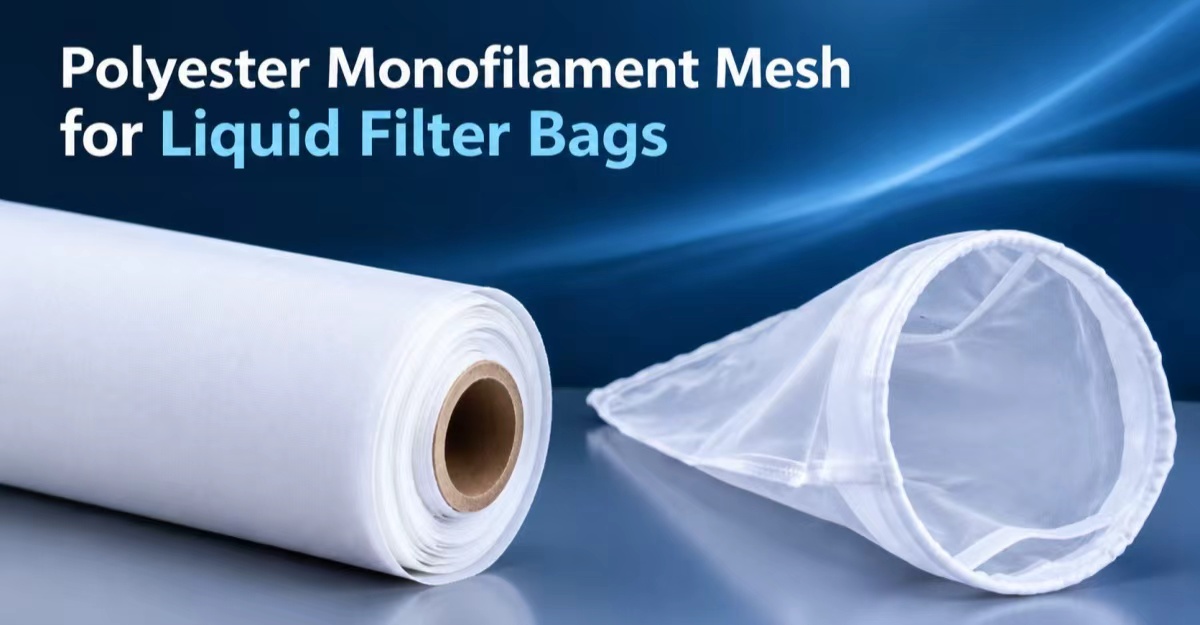
For filter bag manufacturers, selecting a suitable polyester monofilament mesh requires more than simply choosing a micron rating. Mesh opening, thread diameter, open area, mechanical strength, and operating conditions should all be considered.
Here are five key factors to consider when selecting polyester monofilament mesh for liquid filter bags.
1. Choose the Right Micron Rating
Micron rating is one of the first specifications to consider when selecting filter mesh.
It indicates the particle size that the filter mesh is designed to retain. Different liquid filtration applications require different filtration ratings depending on the size of the contaminants and the desired filtration results.
Polyester monofilament mesh is available in different micron ratings to meet various filtration requirements.
When selecting the micron rating, filter bag manufacturers should consider:
· The size of solid particles in the liquid
· The required filtration accuracy
· The characteristics of the contaminants
· The desired filtration efficiency
A suitable micron rating helps achieve the required particle retention without unnecessarily restricting liquid flow.
2. Consider Mesh Opening and Open Area
Mesh opening and open area are two important parameters that influence filtration performance.
Mesh Opening refers to the clear distance between adjacent threads in the woven mesh. It determines the size of particles that can pass through the openings.
Open Area refers to the percentage of the total mesh surface occupied by open spaces. It affects how much liquid can pass through the mesh.
These two parameters are closely related to thread diameter and weaving structure.
For filter bag manufacturers, choosing the right balance between mesh opening and open area is important. A smaller opening may provide finer particle retention, while a higher open area can help improve liquid flow.
The appropriate specification depends on the filtration requirements and operating conditions.
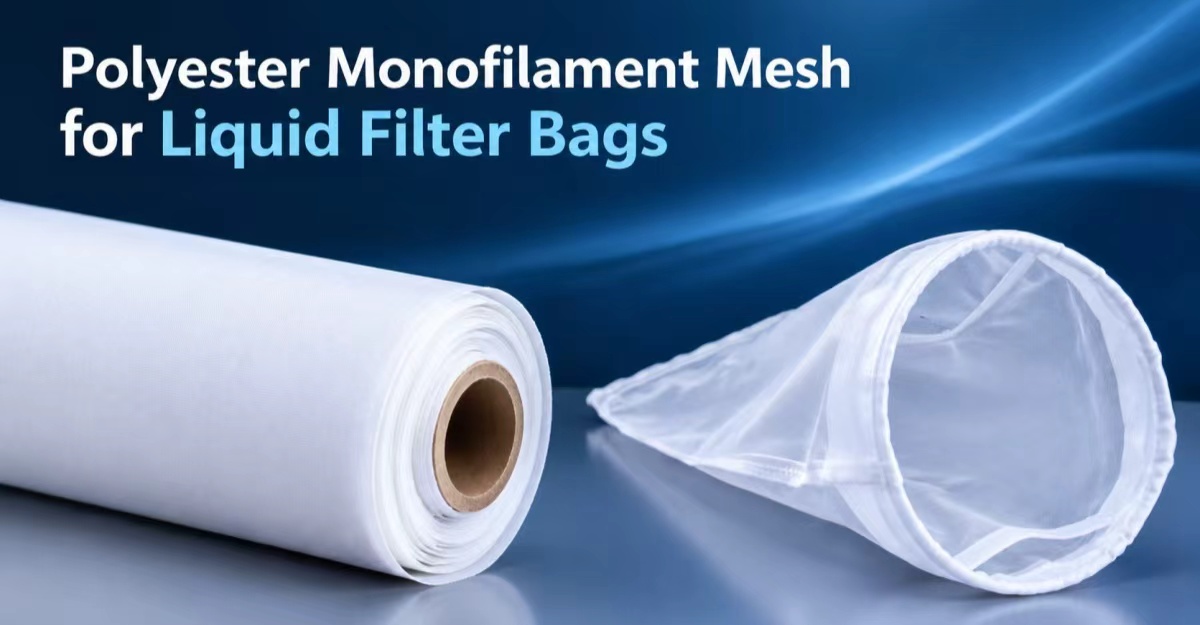
3. Select the Appropriate Thread Diameter and Mesh Strength
Thread diameter affects the physical structure and mechanical properties of woven polyester mesh.
A thicker thread generally provides a stronger mesh structure but may reduce the open area when the mesh opening remains unchanged.
A thinner thread can provide a larger open area, but the overall mesh strength must also be considered.
During liquid filter bag manufacturing, the mesh needs to withstand several production processes, including:
· Cutting and shaping
· Sewing and edge finishing
· Installation into filter bag support structures
· Handling during transportation and use
Therefore, filter bag manufacturers should consider thread diameter together with mesh opening, tensile strength, and the intended operating conditions.
Selecting the right combination helps ensure that the mesh meets both filtration and fabrication requirements.
4. Evaluate Chemical Compatibility and Operating Conditions
Polyester monofilament mesh is suitable for many industrial liquid filtration applications. However, its performance depends on the chemical properties of the liquid and the actual operating environment.
Before selecting the material, manufacturers should evaluate:
· Liquid composition and chemical concentration
· Operating temperature
· Working pressure
· Continuous exposure time
· Cleaning methods and cleaning chemicals
Polyester offers good resistance to many common industrial liquids, but it is generally less suitable for strong alkaline environments and certain high-temperature conditions.
For demanding applications, material compatibility should be confirmed through technical data and practical testing before production.
5. Confirm Mesh Width and Roll Specifications
Besides filtration performance, mesh dimensions are also important for filter bag production.
The correct mesh width and roll length help manufacturers improve material utilization, reduce cutting waste, and maintain production efficiency.
When purchasing polyester monofilament mesh, filter bag manufacturers should confirm:
· Mesh width
· Roll length
· Mesh opening or micron rating
· Thread diameter
· Weaving structure
· Dimensional tolerances
For manufacturers producing different types and sizes of liquid filter bags, customized mesh widths and roll specifications can help simplify the cutting and sewing process.
What Information Should You Provide to Your Mesh Supplier?
To obtain a suitable polyester monofilament mesh specification, filter bag manufacturers should provide as much application information as possible.
The following details can help the mesh supplier recommend an appropriate product:
Information | Purpose |
Required micron rating | Determines filtration requirements |
Mesh opening | Defines the clear aperture size |
Thread diameter | Helps evaluate mesh structure and strength |
Mesh width | Matches cutting and production requirements |
Roll length | Supports production planning |
Liquid application | Helps evaluate material compatibility |
Operating temperature | Confirms suitable operating conditions |
Providing these details helps reduce specification mismatches and makes communication between filter bag manufacturers and mesh suppliers more efficient.
HUZE – Your Polyester Monofilament Mesh Supplier
HUZE manufactures polyester monofilament woven mesh for industrial filtration applications, with mesh openings ranging from 5 to 1900 microns.
We offer customized specifications to meet the requirements of liquid filter bag manufacturers and other filtration product manufacturers.
Whether you need specific mesh openings, thread diameters, widths, or roll lengths, HUZE can work with you to find a suitable mesh specification for your production needs.
Looking for polyester monofilament mesh for liquid filter bag manufacturing?
Contact HUZE to discuss your requirements.
Email: sales@huzemesh.com